Palace
FORMER PALACE HOTEL COMPLEX IN THE HISTORIC CENTRE OF OSTRAVA
Type: Offices, Housing, Services
Built-up area: 3500 m2
Location: Ostrava, Czech Republic
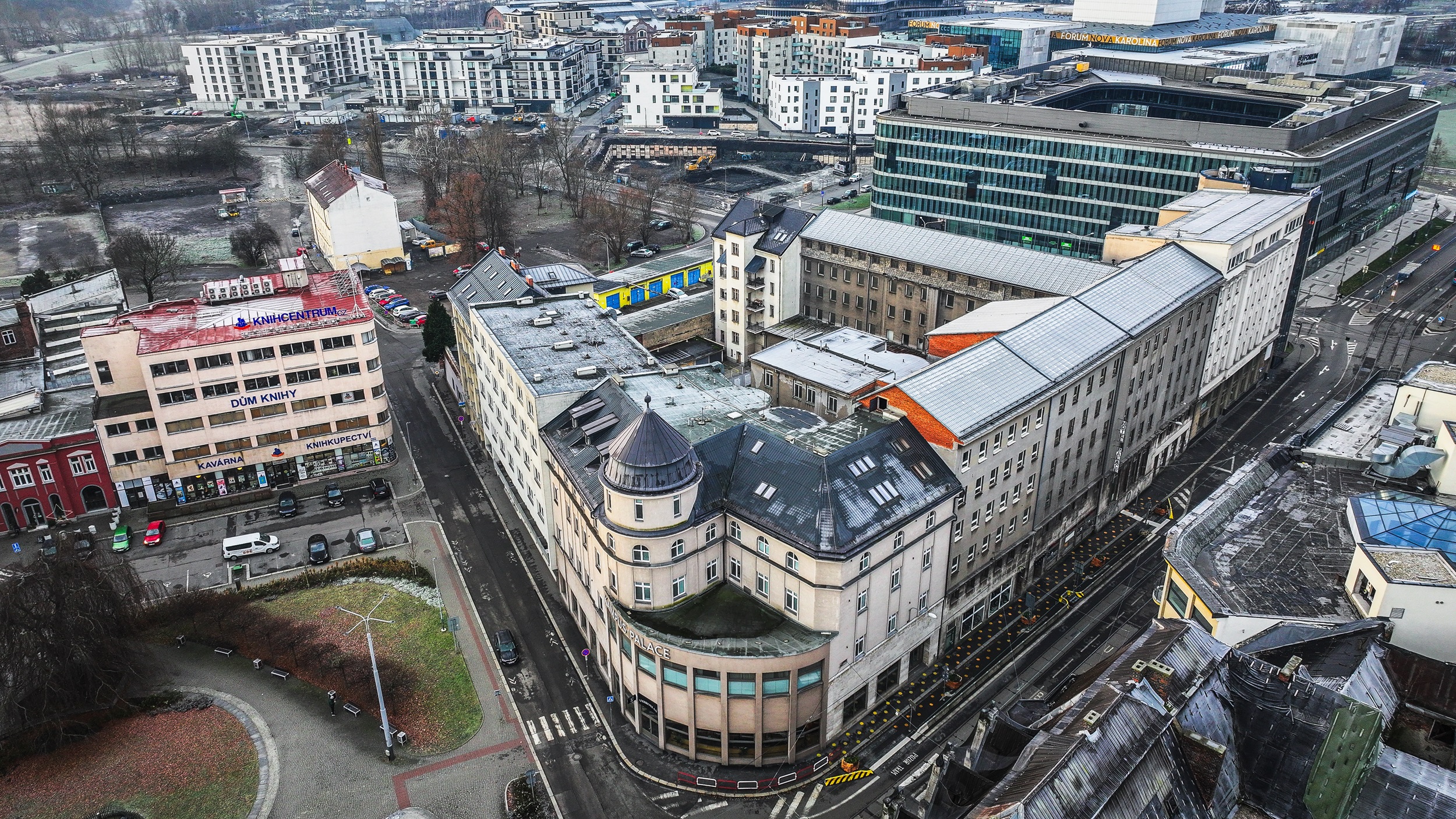
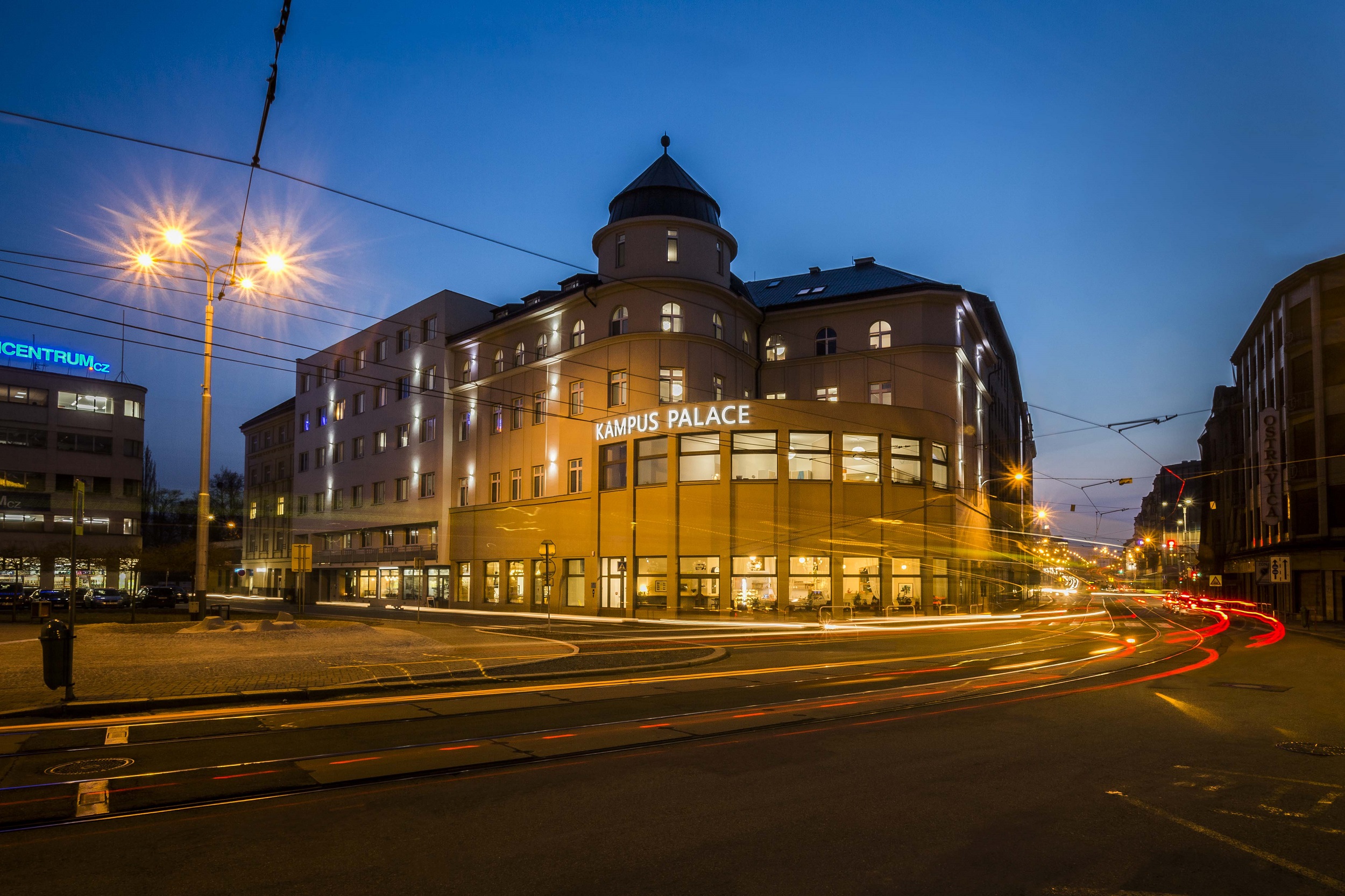
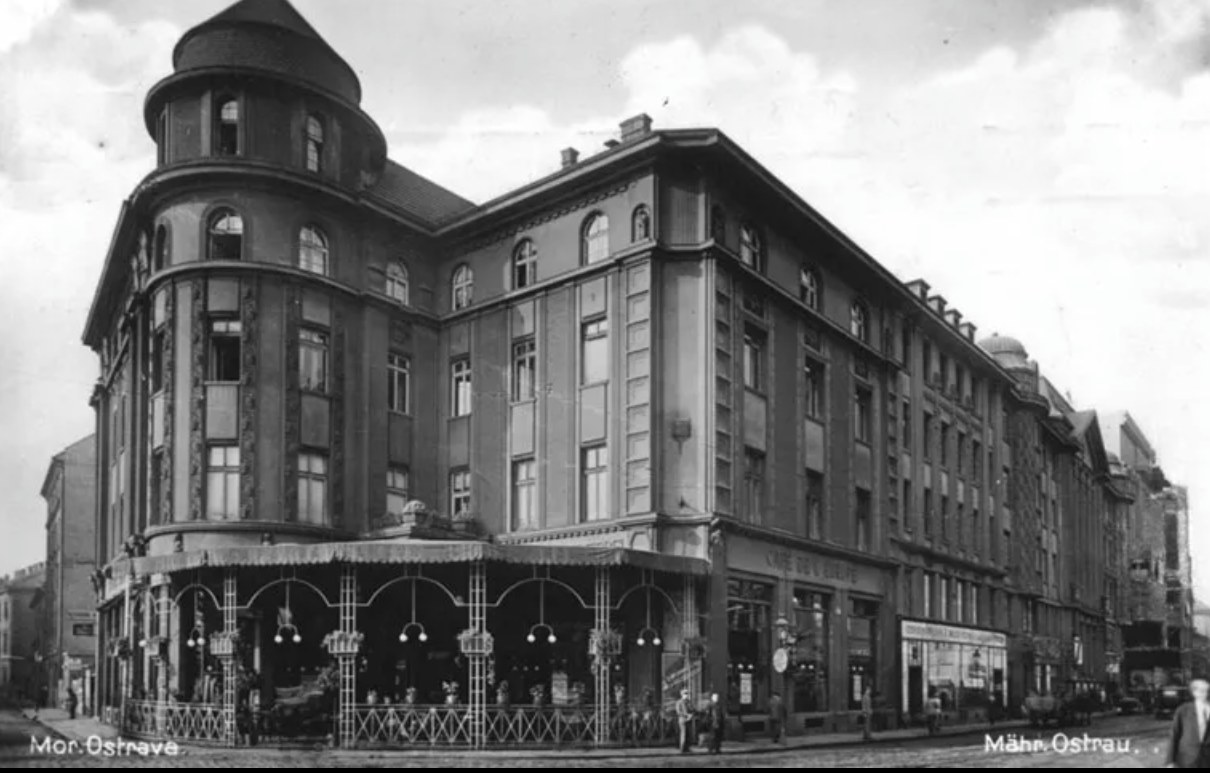
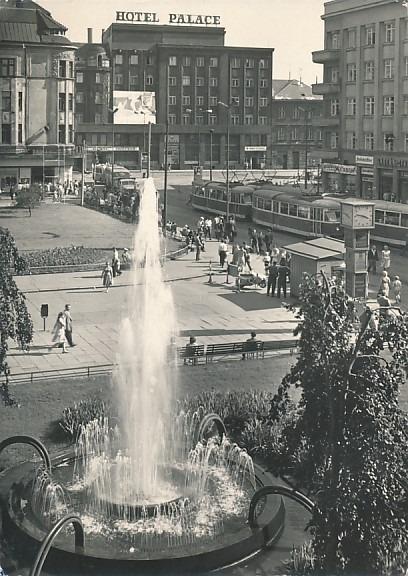
Hotel Palace, opened in 1913 as Hotel National, was one of the most luxurious hotels in the then Austro-Hungarian Empire. After years of decay and unsuccessful reconstructions, part of the building was brought back to life in 2016 thanks to a student and hotel accommodation project called Kampus Palace. Today, however, more than half of the building is still unused. We want to restore this historically valuable building to its former glory and adapt it to the needs of contemporary Ostrava. The acquisition of the entire complex was successfully completed at the end of 2024, when the transaction included not only the purchase of 100% of the business shares, but also the takeover of the operation of Kampus Palace, including commercial premises. We are now preparing a complete reconstruction of the still decaying part of the complex. The winner of the international architectural and urban planning competition for the renovation of the former Hotel Palace complex in the center of Ostrava was the Berlin studio Kuehn Malvezzi Architects. According to the jury, their design best captured the connection between the historical value of the building and the current needs of Ostrava. The intention of the project investor, the Antracit development group, which is part of the Purposia Group investment holding, is to transform the entire city block into a living organism connecting housing, hotel services and high-quality public space. The goal of the renovation is to transform the complex into a modern city block with small-sized rental apartments, supplemented by commercial spaces, civic amenities and a hotel. The project will be implemented gradually, with full completion by 2030.
Final approval of the original Palace Hotel
1913
Nationalization and inclusion under Interhotels Čedok
1945
Privatization and reconstruction for the operation of Union Bank
1992
Operation discontinued
2005
Owner: NBC
2006
Owner: Seven Trees a. s.
2010
Reconstruction of part of the complex, Kampus Palace opened for business
2016
2024
Owner: Antracit
An architectural competition is underway
2025
Kuehn Malvezzi Architekts wins architectural competition
2026
Completed architectural study
SIGNED CONTRACT FOR PROJECTION
Commencement of construction work
2027
Overall completion of the reconstruction
2030
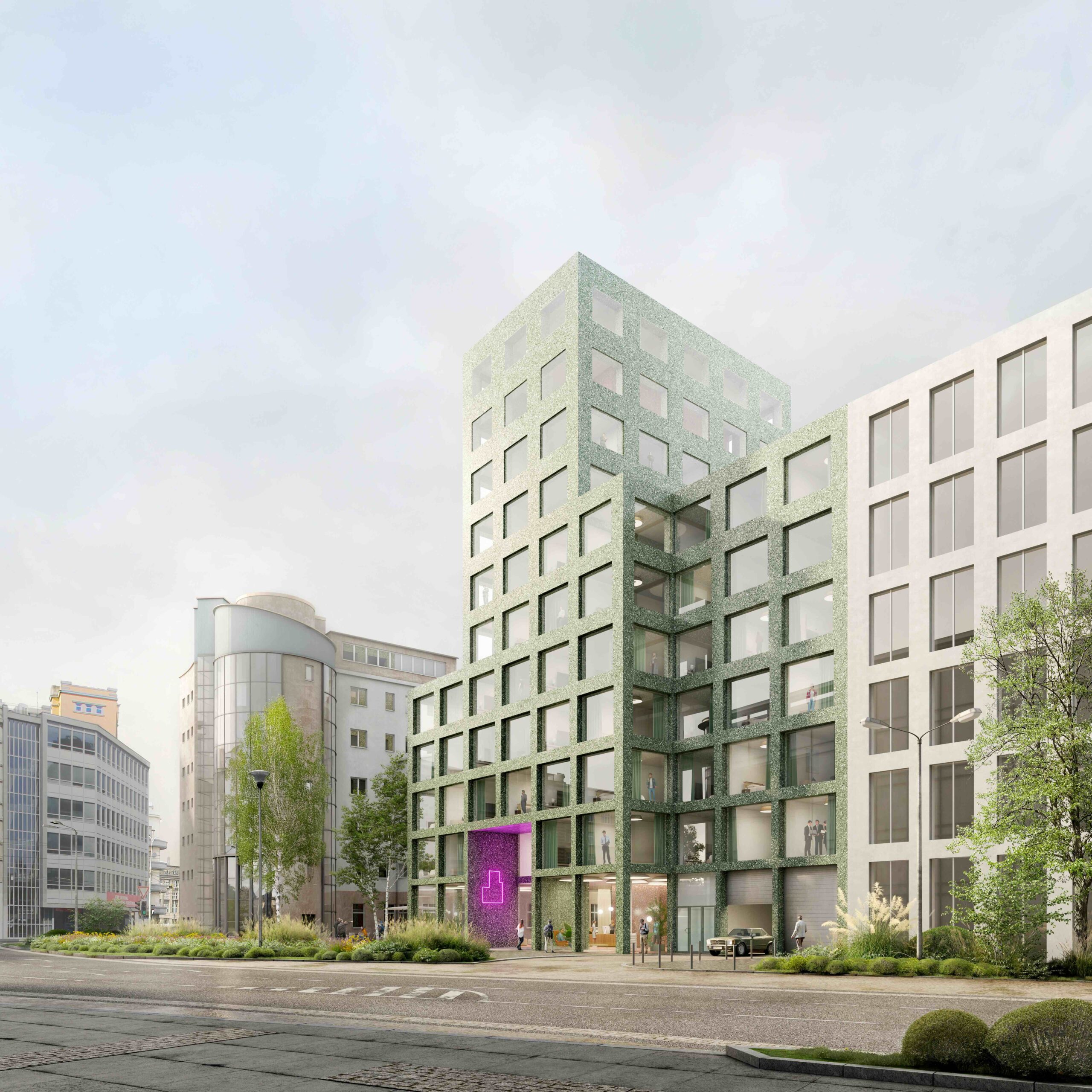
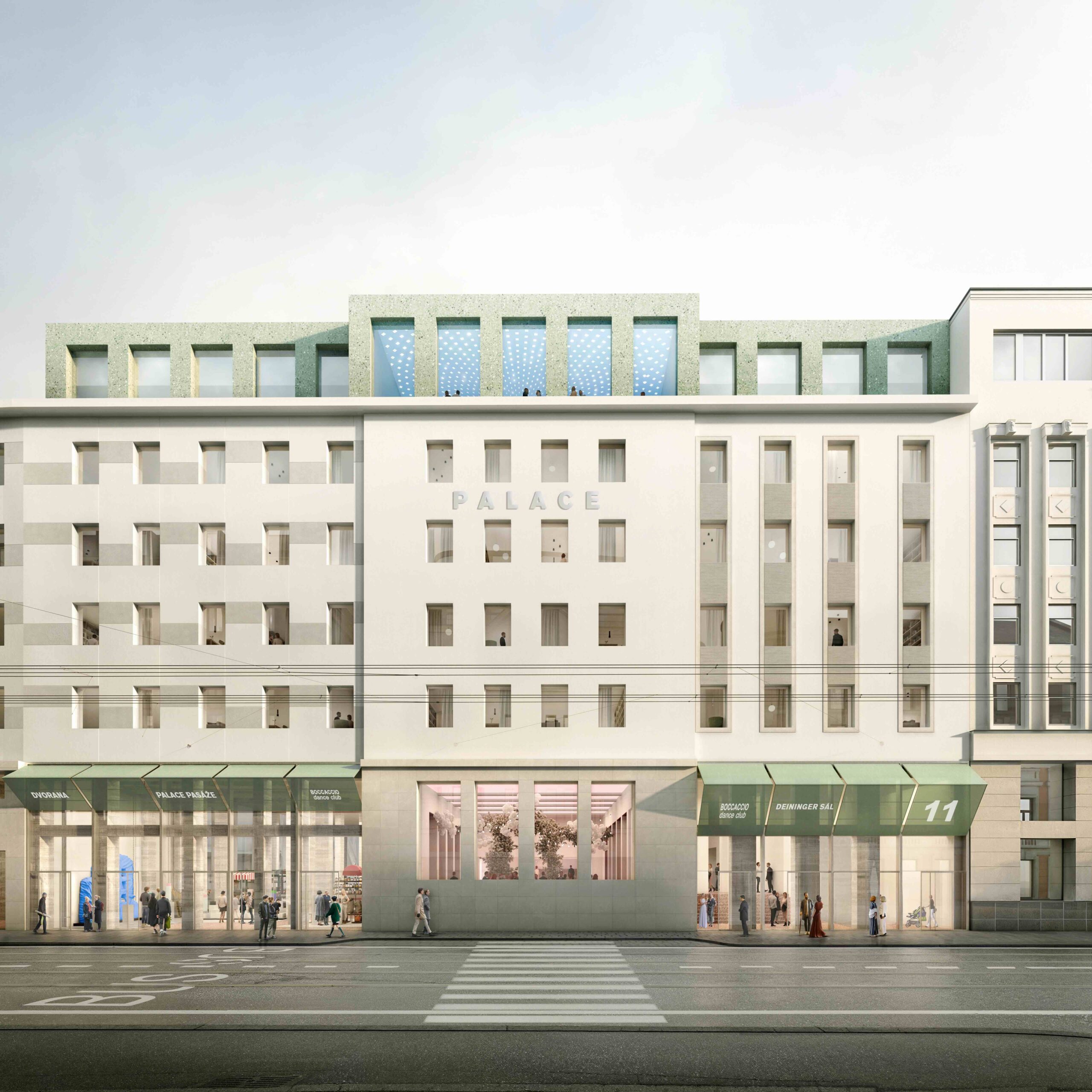
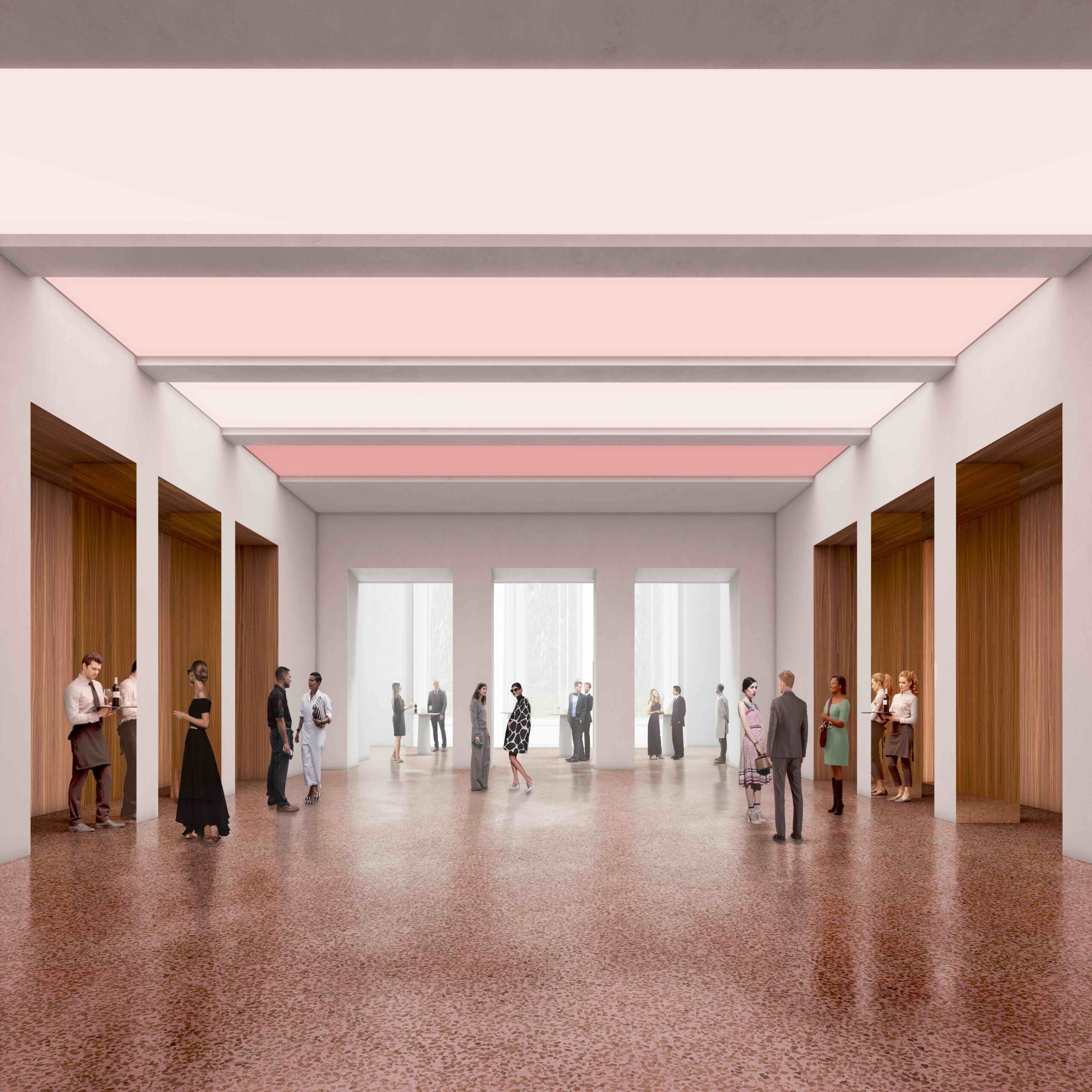
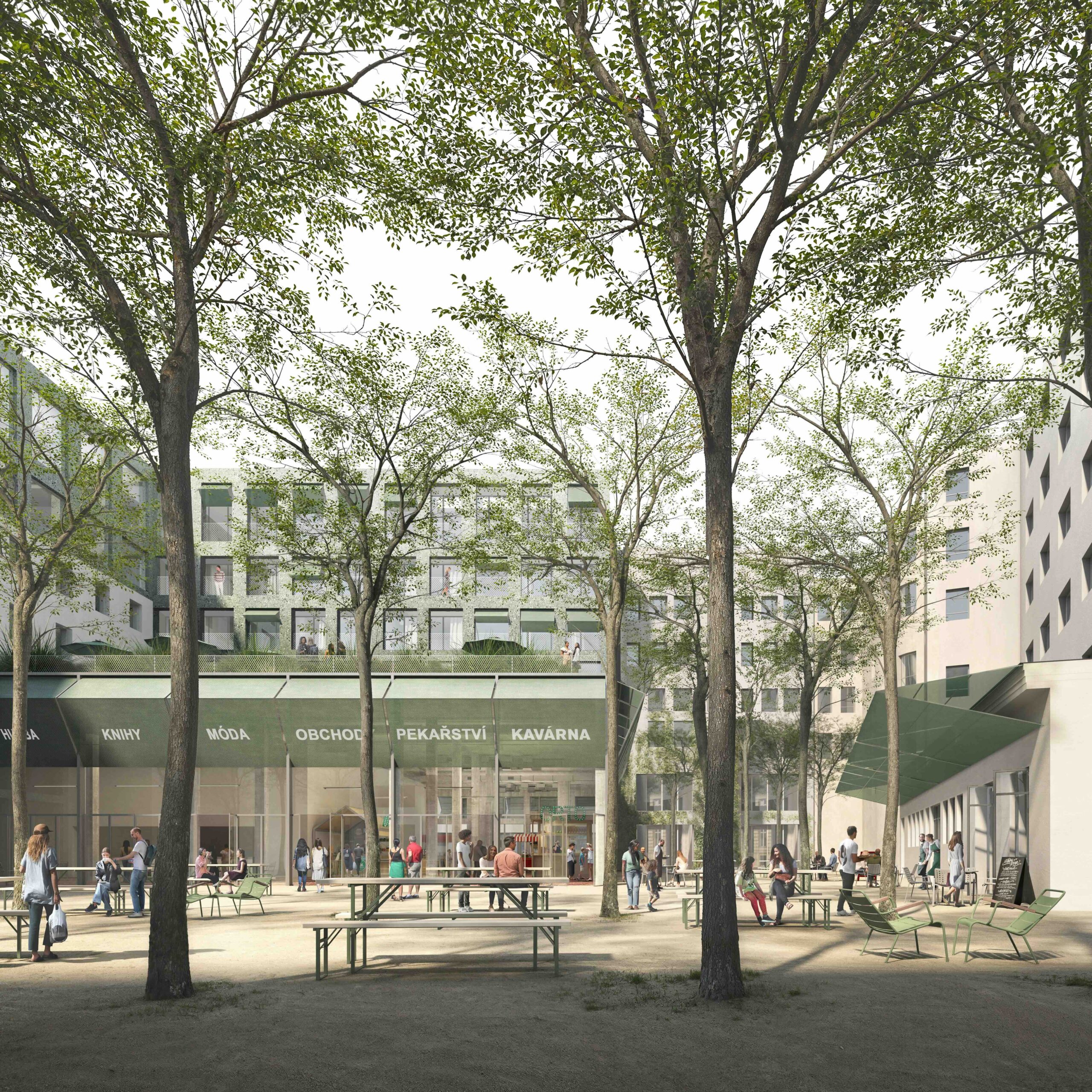

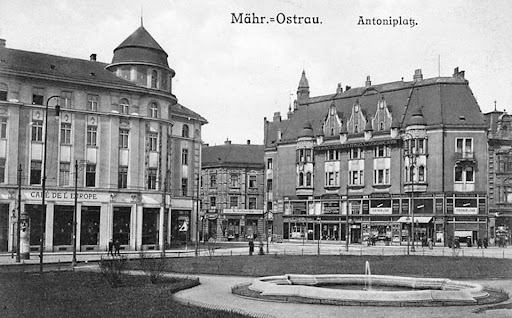
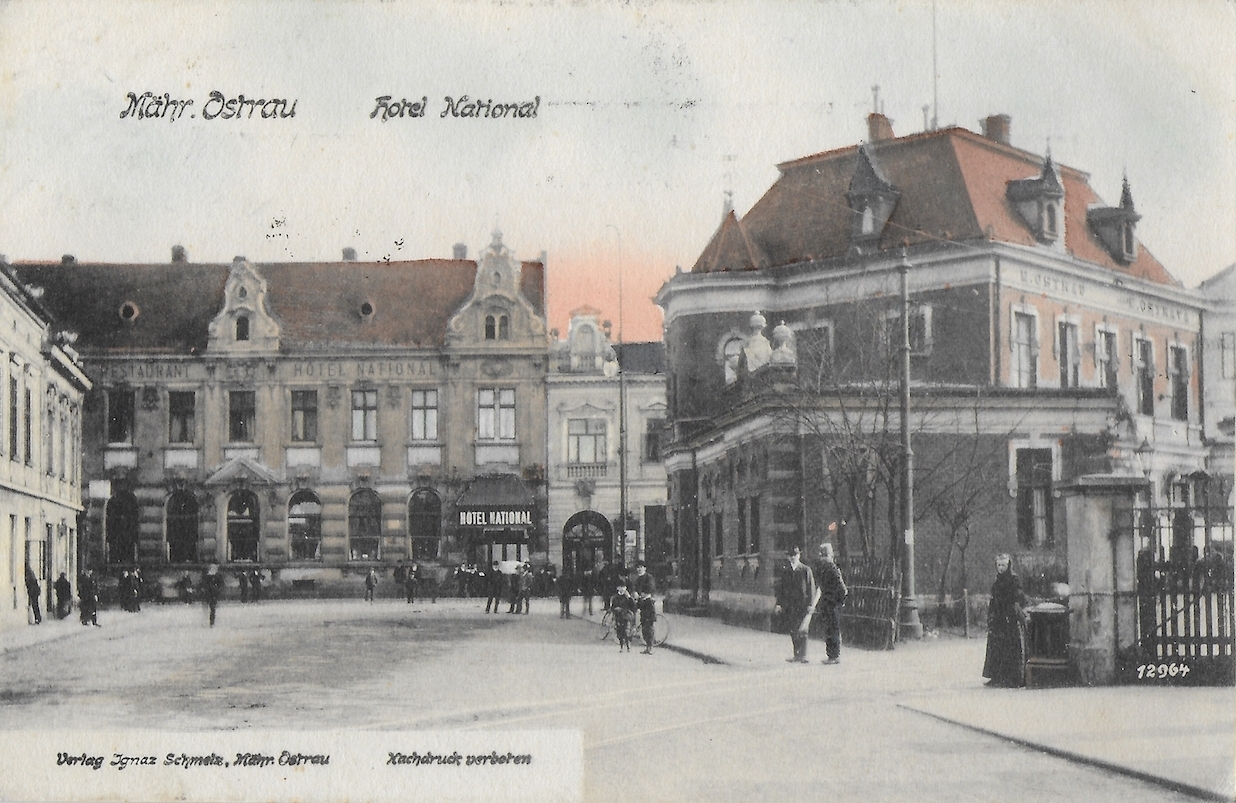
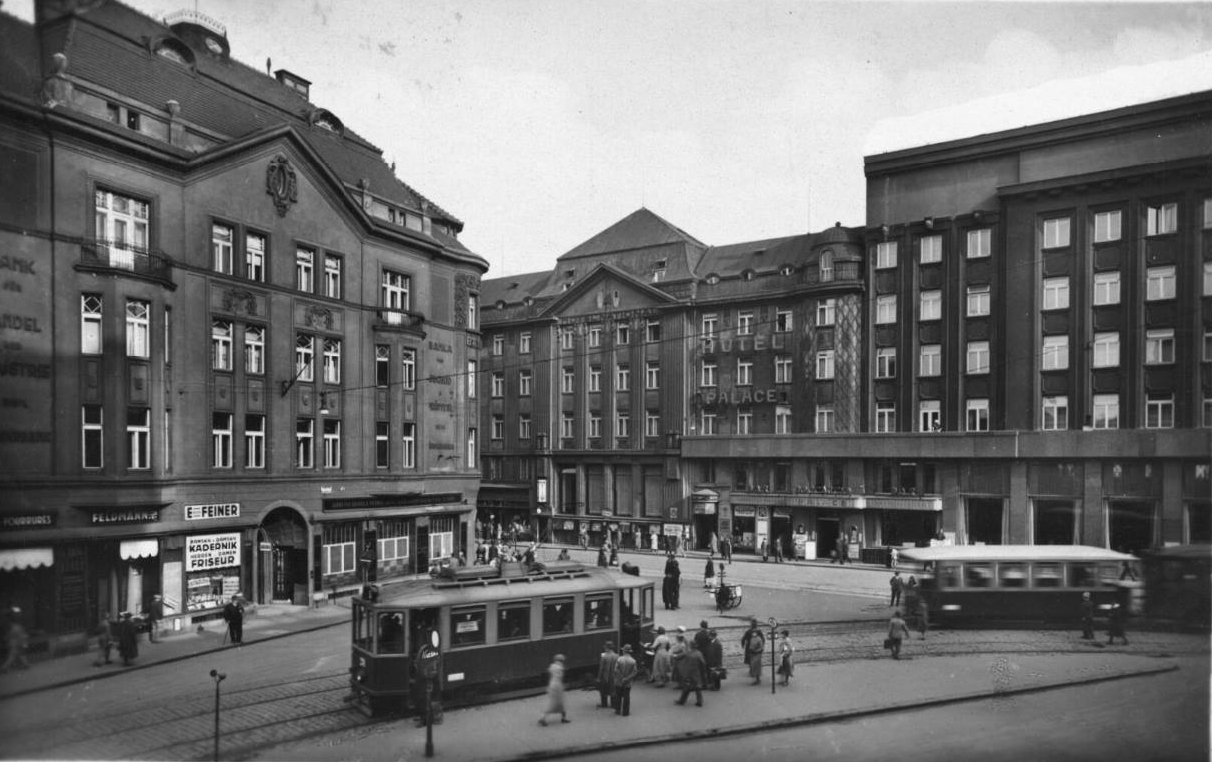
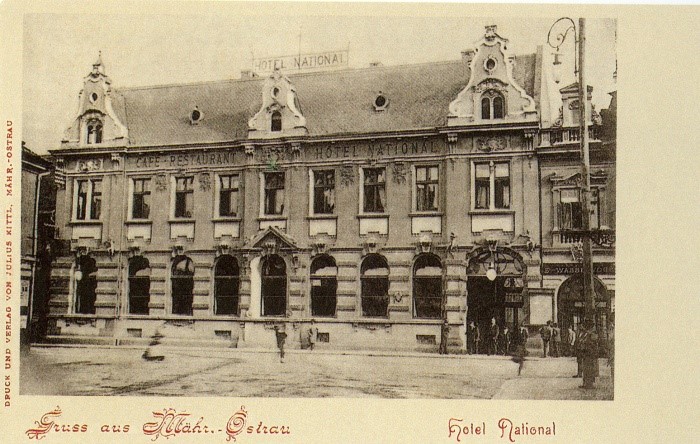
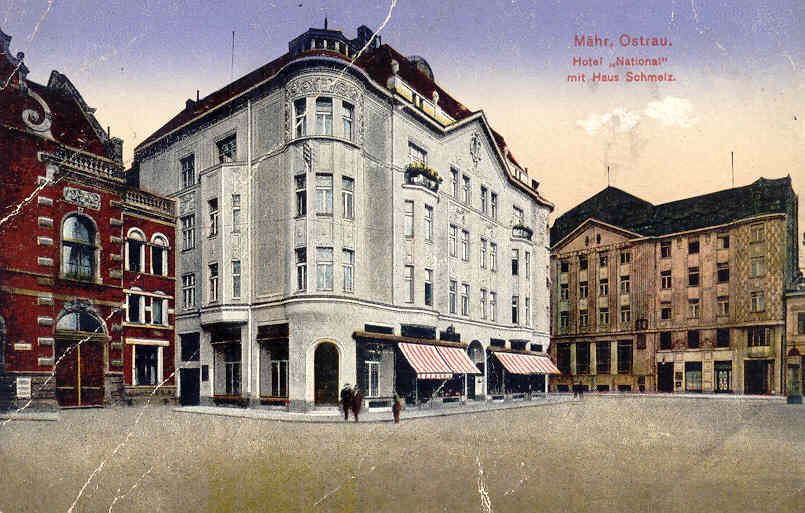
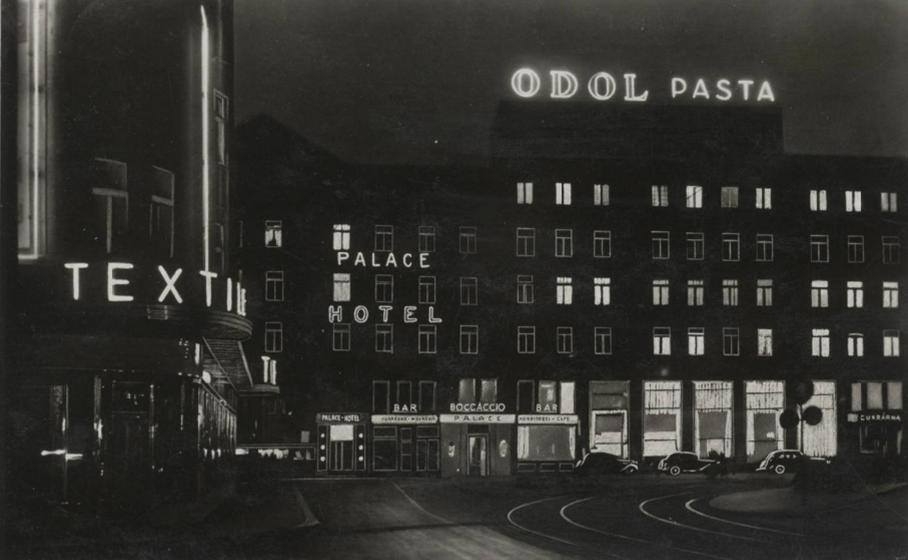
OSTRAVA PALACE WILL BE TRANSFORMED ACCORDING TO THE DESIGN OF BERLIN-BASED STUDIO KUEHN MALVEZZI ARCHITECTS
89 architectural studios from 27 countries around the world entered the international competition. The proposals of the five finalists were assessed by a jury also consisting of international experts. The Antracit Group, together with Kuehn Malvezzi Architects, is now entering the phase of preparing the project documentation. The start of construction work is planned for 2027. The implementation will be divided into several stages, which will allow for the gradual commissioning of individual parts of the complex. We currently expect the completion of the last stage in 2031. The Palace will gradually transform into an open and lively place for residents and visitors to the city.
PALACE ENTERS A NEW STAGE WITH KUEHN MALVEZZI WITH RESPECT FOR HISTORY
“The jury highly appreciates the design by Kuehn Malvezzi for its sensitive treatment of the historical layers of the site and for its informed dialogue with the legacy of the original architect Wunibald Deininger. The architects build on this continuity and create a clear urban framework and a uniform composition of materials that redefines the city block, naturally incorporates the preserved buildings and at the same time allows for a high degree of operational and spatial flexibility for future development. The design convinces with its consistent approach to form and its significant potential to direct the long-term development of the entire project,” says architect Pascal Müller, chairman of the jury.
The design thus counts on maximum respect for the historical character of the building, which was opened in 1913 as the Hotel National according to the design of the Viennese architect Wunibald Deininger. The winning project impressed the jury primarily with its ability to build on the morphology of Ostrava, incorporate contemporary architecture into it, and create new spaces that complement the structure of the entire block and its inner courtyards and passages. “The Palace has a significant place in Ostrava’s history, and we want it to play an equally important role in the future. This transformation will affect life in the entire area, not only for the future residents of the Palace, but also for all those who will naturally use it,” says Jan Hasík, CEO of the investment holding Purposia Group.
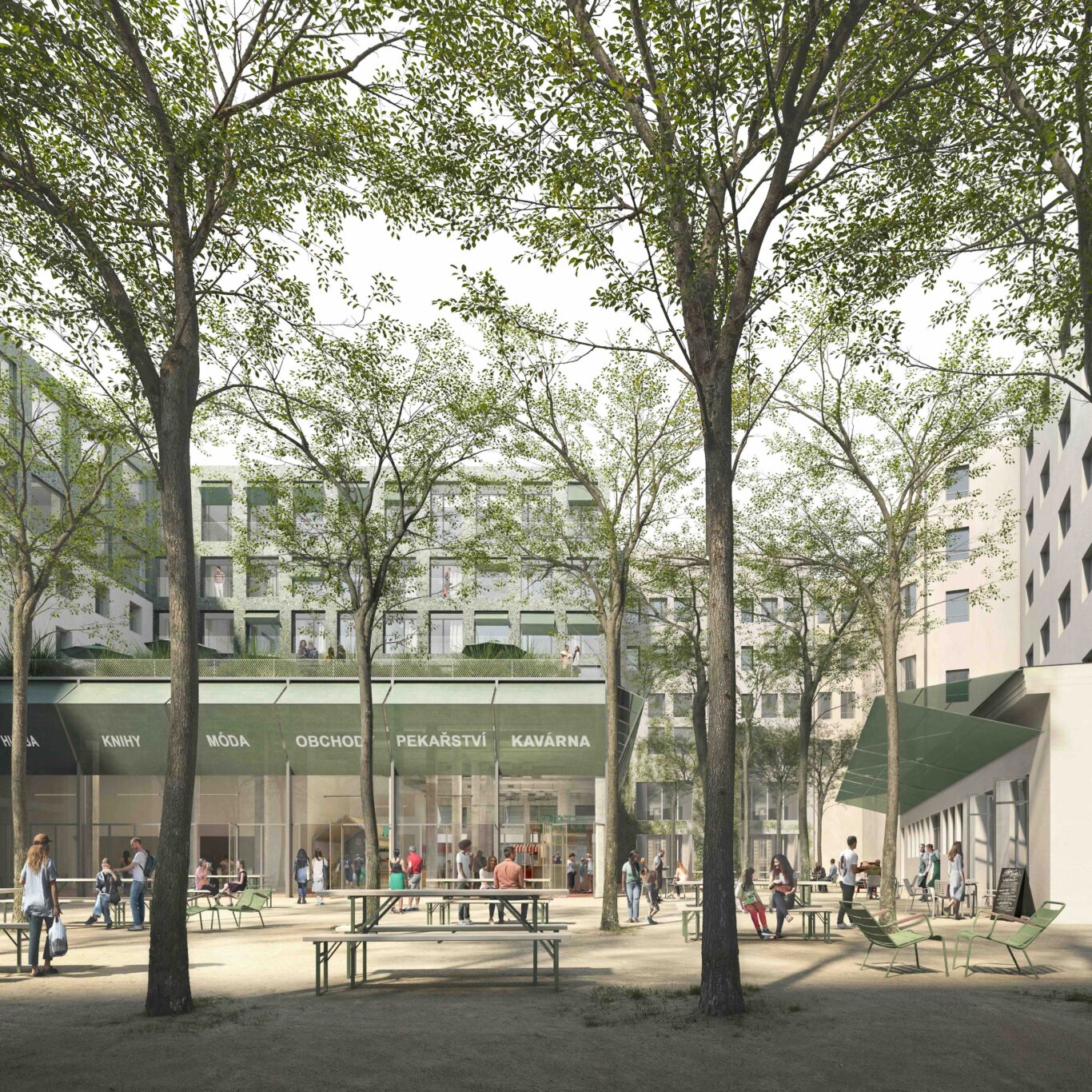
FUTURE USE OF THE PALACE
The winning proposal creates a full-fledged urban block consisting of a set of interconnected buildings, combining the reconstruction of preserved buildings, the demolition of existing unsuitable buildings and the completion of new structures. All this is complemented by through passages and courtyards that open the complex towards the surrounding urban structure and support its active integration into the life of the center. The main function of the new block will be rental housing in high-quality, designer-designed small-sized apartments, complemented by social spaces and services directly in the building. Other uses will include a modern lifestyle hotel and smaller commercial units on the open and lively ground floor, which offers an attractive public space with shops, gastronomy and other services as well as a publicly accessible garden. The significance of the area is underlined by the preserved and restored historical interiors – in particular the social Deininger Hall, which will be newly integrated into the daily operation of the complex, as well as the spaces of the former Boccaccio nightclub. The existing student accommodation Kampus Palace remains in its current form.
INVESTMENT IN THE CITY AND WORK SCHEDULE
“The Palace renovation is a strategic investment by our development group and at the same time a long-term investment in the quality of Ostrava’s urban space. Part of our plan is also the operation of the entire complex, which will allow us to ensure its sustainability and development over time. We are now starting negotiations on the contract and the progress of the work, including the phasing of the construction. The first stage will begin with the renovation of the building on 28. října Street. I would like to thank all participants in the competition dialogue, especially the judges and invited experts, including representatives of national heritage protection. The discussion of the conditions arising from the protection of cultural heritage will also be part of the nearest schedule,” adds Zuzana Bajgarová, CEO of the Antracit group.

ABOUT THE WINNING STUDIO KUEHN MALVEZZI ARCHITECTS
Kuehn Malvezzi Architects is a Berlin-based architectural firm founded in 2001 by architects Simona Malvezzi, Wilfried Kuehn and Johannes Kuehn. The studio quickly established itself as one of the leading architects in the field of modern architecture with a humanistic approach. It is known for its innovative work in the field of public and cultural buildings, but also for its ability to design projects that are at the same time aesthetic, functional and durable. Notable projects: renovations and new buildings of museums and cultural institutions, such as the Julia Stoschek Collection in Düsseldorf, the Museum Belvedere in Vienna, the Rieckhallen at Hamburger Bahnhof in Berlin or the Insectarium in Montreal, the Prinzessinnenpalais in Berlin or the PHI Contemporary in Montreal. Awards: Canadian Architect Award, nomination for the Mies van der Rohe Award and finalist for the DAM Prize for Architecture in Germany. www.kuehnmalvezzi.com
On the image are Felix Siegrist (left, a member of the project team) and Wilfried Kuehn (right).
QUALITY COMPETITION, STRONG DESIGNS, DIFFERENT APPROACHES
The competition dialogue brought exceptionally high-quality proposals that offered different perspectives on the renovation of the historical block. After more than six months of competition dialogue, the jury, consisting of an independent part of experts and a dependent part consisting of investor representatives, agreed on the following order of finalists:
1st place: Kuehn Malvezzi Architects (DE),
2nd place: NEUHÄUSL HUNAL (CZ),
3rd place: re:architekti + onsitestudio + Transsolar (CZ/IT/DE).
The other finalists were Objektor + Atelier Altan (CZ/FR) and ROAR architekti (SK). The entire competition was organized by the CCEA MOBA platform and the regularity clause was issued by the Czech Chamber of Architects to the competition conditions.
Contact

Michaela Dvořáková
michaela.dvorakova@antracit.euSource of archive photos: Historic Ostrava
Kampus Palace | Occupied
Student and hotel accommodation and commercial units.
www.kampuspalace.cz
Palace | Volno
Po rekonstrukci se předpokládá získat min. 5 500 m² pronajímatelných ploch, z toho 3 600 m² k rezidenčnímu bydlení a 1 900 m² ke komerčnímu využití, včetně dostatečného počtu parkovacích míst ve dvoraně komplexu.